Why under-stairs wine storage feels so polished
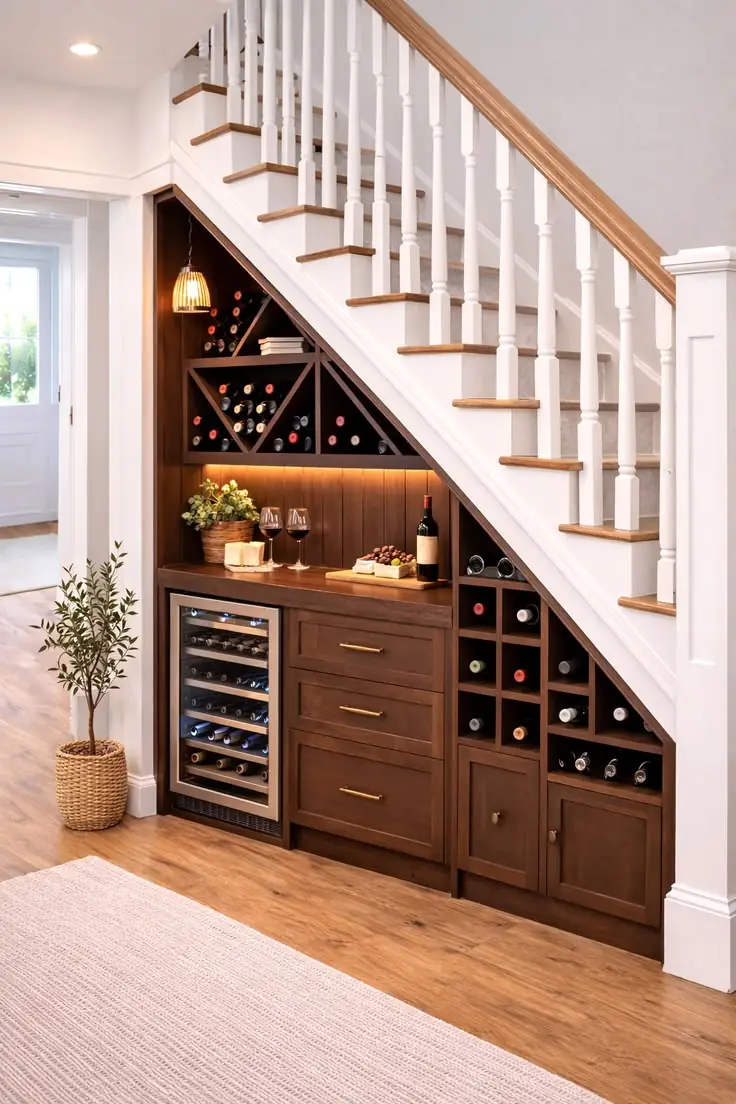
- The sloping ceiling naturally suits bottle racks and low cabinetry.
- It turns leftover square footage into something decorative and useful.
- Open cubbies and closed storage can sit side by side without looking heavy.
- It creates a compact entertaining zone without needing a full bar room.
- The joinery can be matched to the hallway so it feels original to the house.
What usually makes the layout successful
The nicest examples balance display and function. A few visible bottle sections create rhythm, while drawers or cupboard doors hide the less attractive items such as tools, napkins, or occasional-use glassware. That contrast is usually what keeps the space from looking busy.
It also helps to let the lowest part of the staircase handle the smallest or least-used sections. That keeps the useful countertop and the easiest-access storage in the taller part of the joinery where it is more comfortable to use.
Usually, the best version does not try to turn every inch into display.
Wine Fridges
Keeps bottles at the right temperature without turning this space into cluttered storage.
This is what makes the lower section of the setup actually usable day to day.
- Adds temperature control without needing a full cellar
- Fits neatly into lower cabinetry sections
- Makes the whole feature more practical day to day
Commonly used in small homes and tight spaces
This section contains affiliate links. As an Amazon Associate, I earn from qualifying purchases.
Wine Fridges
Keeps bottles at the right temperature without turning this space into cluttered storage.
This is what makes the lower section of the setup actually usable day to day.
- Adds temperature control without needing a full cellar
- Fits neatly into lower cabinetry sections
- Makes the whole feature more practical day to day
Commonly used in small homes and tight spaces
This section contains affiliate links. As an Amazon Associate, I earn from qualifying purchases.
How to keep it practical, not just decorative
If you regularly open and serve wine here, include one proper landing surface. Even a short stretch of counter is enough for pouring, setting down glasses, or opening a bottle without turning the area into a full drinks station.
For long-term or more valuable wine storage, it is also worth being realistic. Open bottle cubbies look good, but they do not replace temperature-controlled storage. A compact wine fridge is usually the practical layer that makes the whole feature work harder.
That is often the difference between a pretty idea and a genuinely useful one.
Details that make it feel custom
Matching the timber tone to nearby flooring or stair treads helps the joinery feel built in from the start. Soft lighting under shelves or above a backsplash can also lift the whole feature without needing much decoration.
If you want the area to stay calm, limit the number of finishes. One timber, one paint tone, and one hardware choice usually reads more elegantly than mixing too many materials into a small space.
The cleaner the finish palette, the more architectural the result feels.
- Use open racks for display and closed cupboards for the less attractive items.
- Keep one practical surface for pouring or setting bottles down.
- Consider a wine fridge if you want better storage conditions.
- Match the joinery to the staircase so it feels designed in.