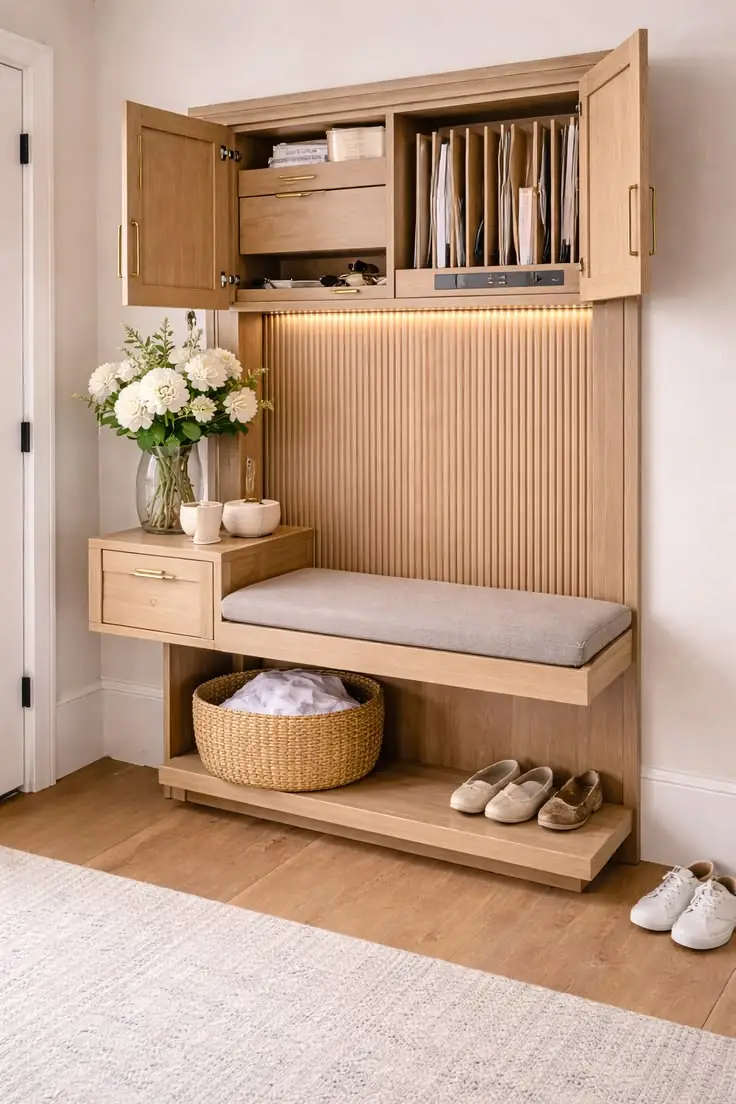
Why workspaces collect clutter so quickly
- Paper stacks build up faster than expected.
- Cables and chargers spread into the background of the room.
- Daily tools stay out because they do not have a proper landing place.
- Shared rooms often need storage that can flex between uses.
- Visible clutter makes the whole room feel busier to work in.
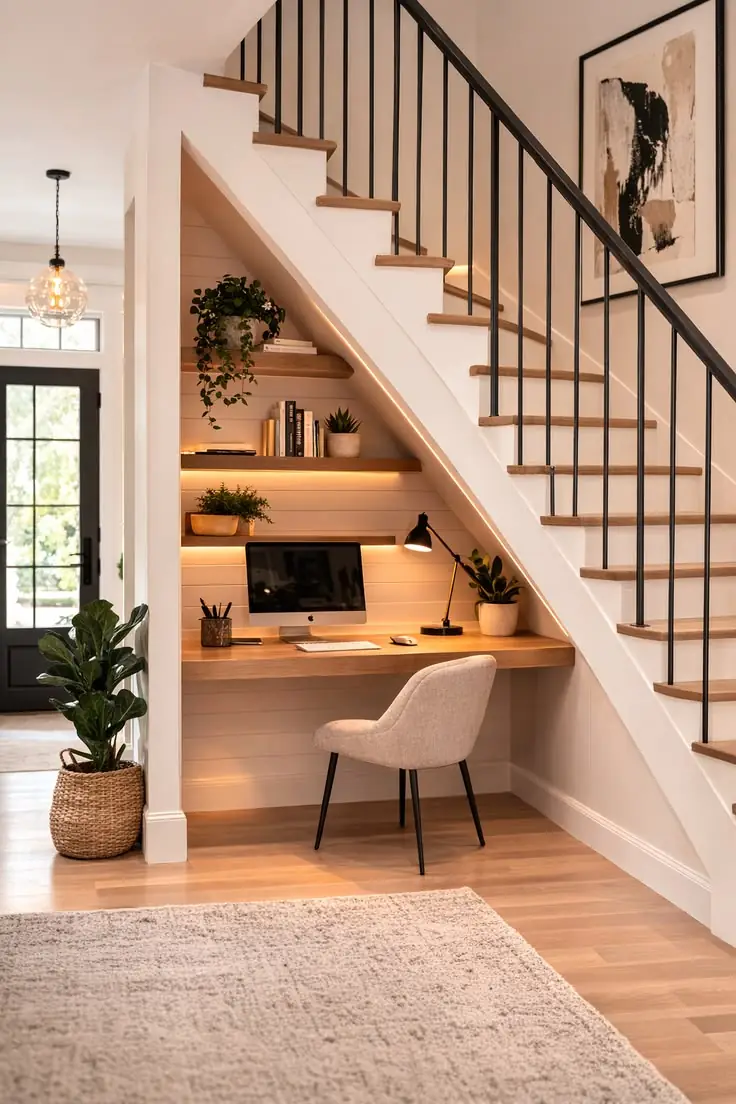
Desk Storage
A useful starting point for pens, notebooks, chargers, and the smaller tools that tend to spread across the work surface.
- Keeps daily tools within easy reach
- Reduces visible surface clutter
- Makes end-of-day resets easier
Used in everyday homes
See how this worksThis section contains affiliate links. As an Amazon Associate, I earn from qualifying purchases.
Why storage should support focus, not just hold supplies
The strongest home office layouts are usually built around what needs to stay visible and what should disappear. Daily-use tools should be close by, but paper archives, chargers, backup tech, and bulk supplies often work better in drawers, boxes, or a cabinet nearby.
That balance is what keeps the desk from carrying everything at once. When the main surface stays lighter, the room often feels easier to work in immediately.
Usually, the best office storage removes friction more than it adds structure.
What helps the room stay clearer over time
One tray for active papers and one home for archived material usually goes further than several overlapping storage pieces. It also helps to give chargers, plugs, and spare devices one dedicated zone rather than letting them drift between desk drawers and shelves.
If the office shares space with a guest room or living area, flexible storage becomes even more important. A rolling cart, lidded box, or slim cabinet can help the work setup contract when it is not in use.
That is often what keeps the room from feeling permanently in work mode.
Small details that make a real difference
Cable management often has more visual impact than adding another storage piece. One concealed charging area or cable box can make the whole desk look cleaner with very little effort.
It also helps to store by frequency rather than good intentions. The tools you actually reach for daily should stay nearest the desk. Everything else can move into closed storage so the room feels calmer at first glance.
Often, a quieter desk is what makes the room feel more focused.
- Keep everyday tools within arm's reach.
- Separate active paper from archived paper.
- Give cords and chargers one fixed home.
- Use flexible storage if the room has more than one job.