As an Amazon Associate I earn from qualifying purchases.
Condensation & Air Quality
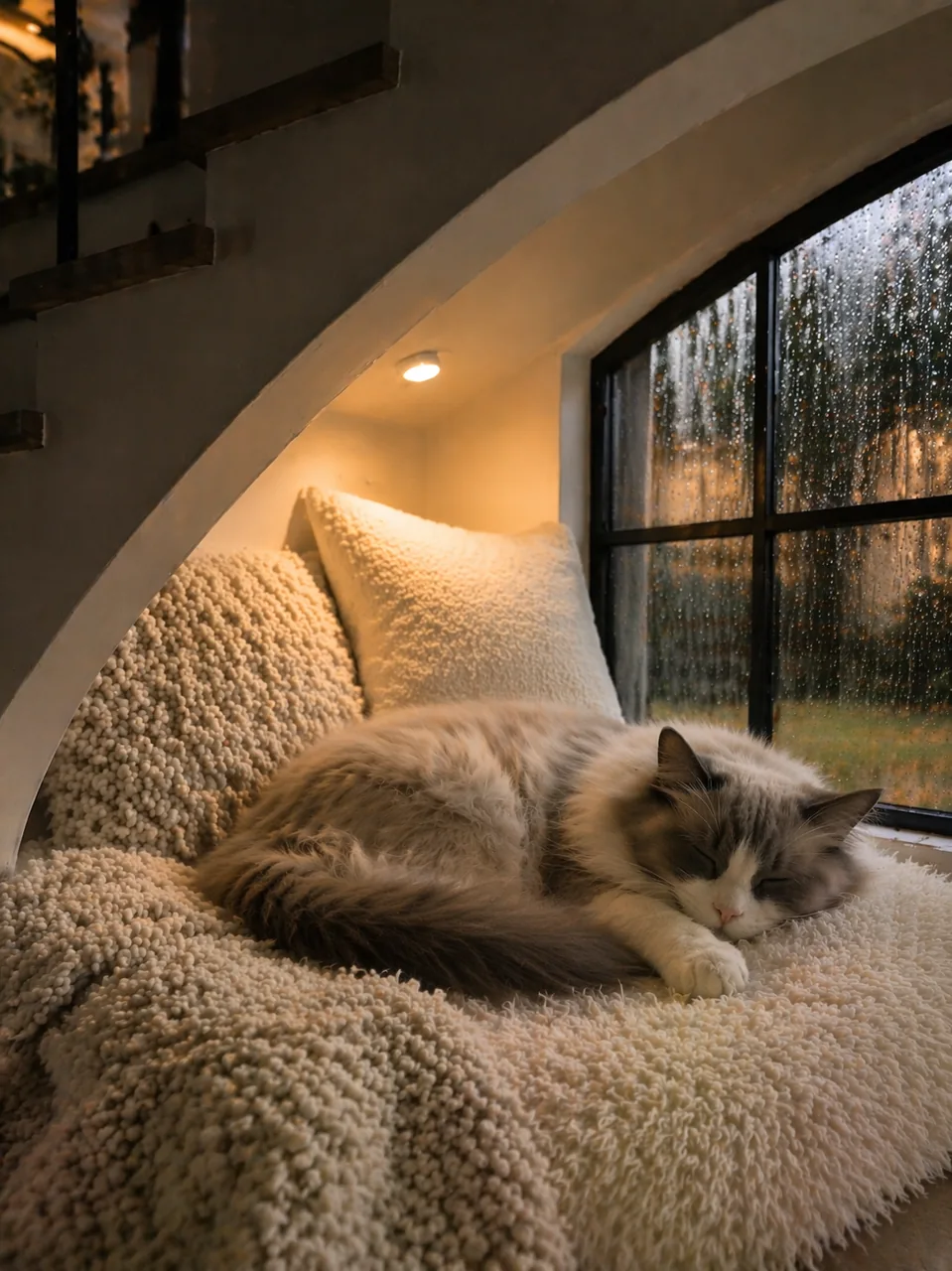
Cats often choose the calmest, warmest-looking spot in the room, but that same spot can sit beside cold glass, heavy curtains or a wall that never fully dries.
In some homes, the air around a cat's favourite resting spot can quietly become one of the least breathable areas in the room.
As an Amazon Associate I earn from qualifying purchases.
Quick answer
In most homes, the issue is not dramatic dampness. It is low-level moisture that returns night after night and settles around the exact places a cat likes to revisit.
That can make one sill, chair, basket or corner feel faintly stale even while the rest of the room seems perfectly comfortable.
Because cats are creatures of habit, they spend more time than we do testing the same patch of air. If that one area sits near condensation, fabric that holds moisture or a cold external surface, the problem can stay local for quite a while before it becomes obvious as a room issue.
The result is subtle: the room is not visibly wet, but it is not clearing properly either. Over time, slightly stale or damp air can affect comfort, breathing, and overall wellbeing - especially in spaces used repeatedly.
Most issues improve quickly once the air is properly dried and the space can breathe again.
If your cat keeps returning to a room that feels heavy by morning, treat the air first rather than only moving the bed or wiping the window.
When moisture is reduced across the room, the favourite perch usually becomes more usable again without needing to strip the space back or make it feel less cosy.

Usually the fastest way to improve air quality in the exact spaces cats return to every day.
Most useful where a cat spends time near bedrooms, lounge windows, enclosed corners or other rooms that quietly stay humid overnight.
See the main fixCats often keep returning to the same small zone, so reducing the room's moisture load early usually changes that one area fastest.
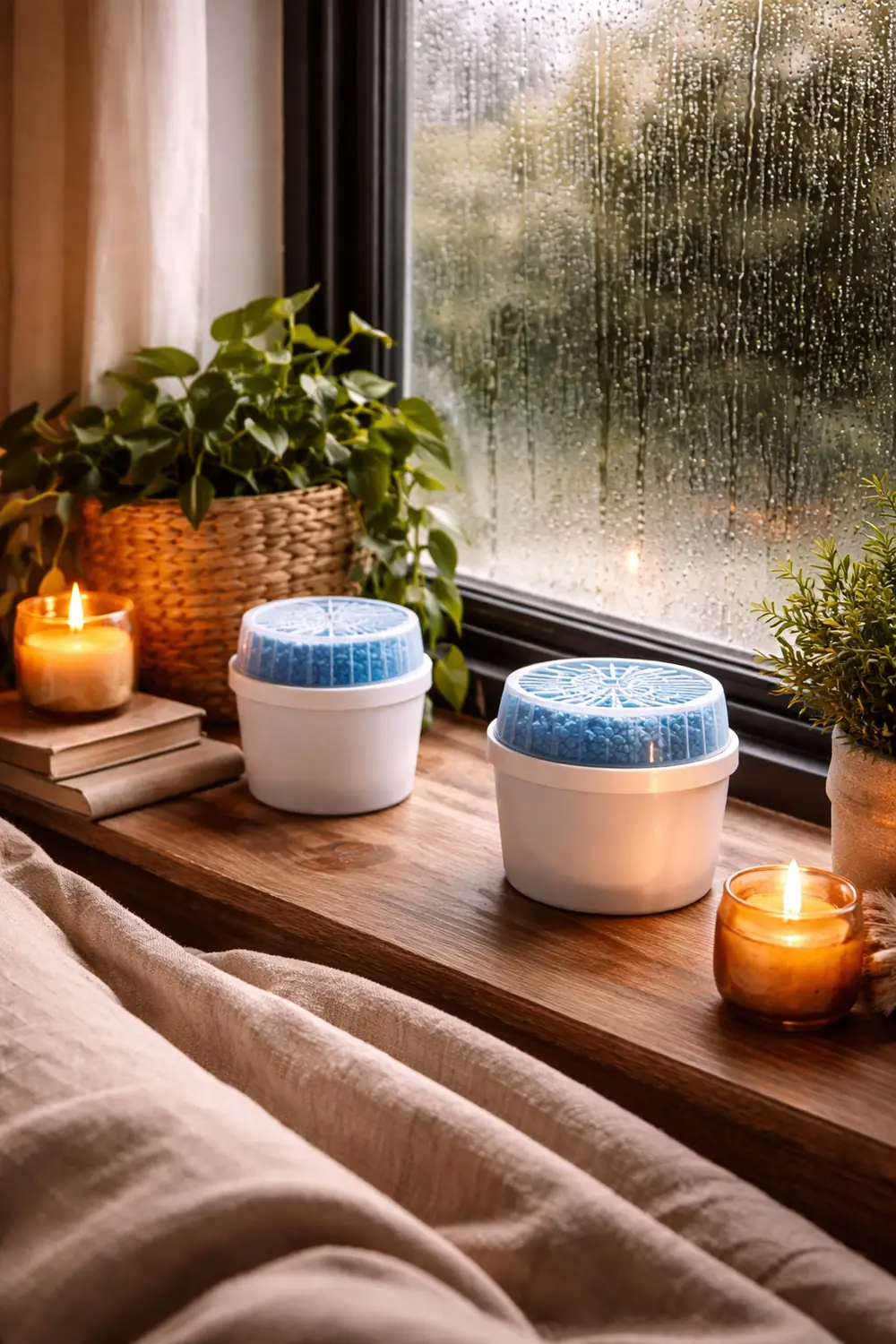
A support option when the issue feels concentrated around one sill, cabinet edge or tucked-away resting area.
Most useful when the overall space is manageable but one localised zone keeps feeling stale.
Support for smaller spacesIf the whole room is not damp but one perch, basket or curtain corner keeps feeling stale, a smaller support option may be enough alongside better airflow.
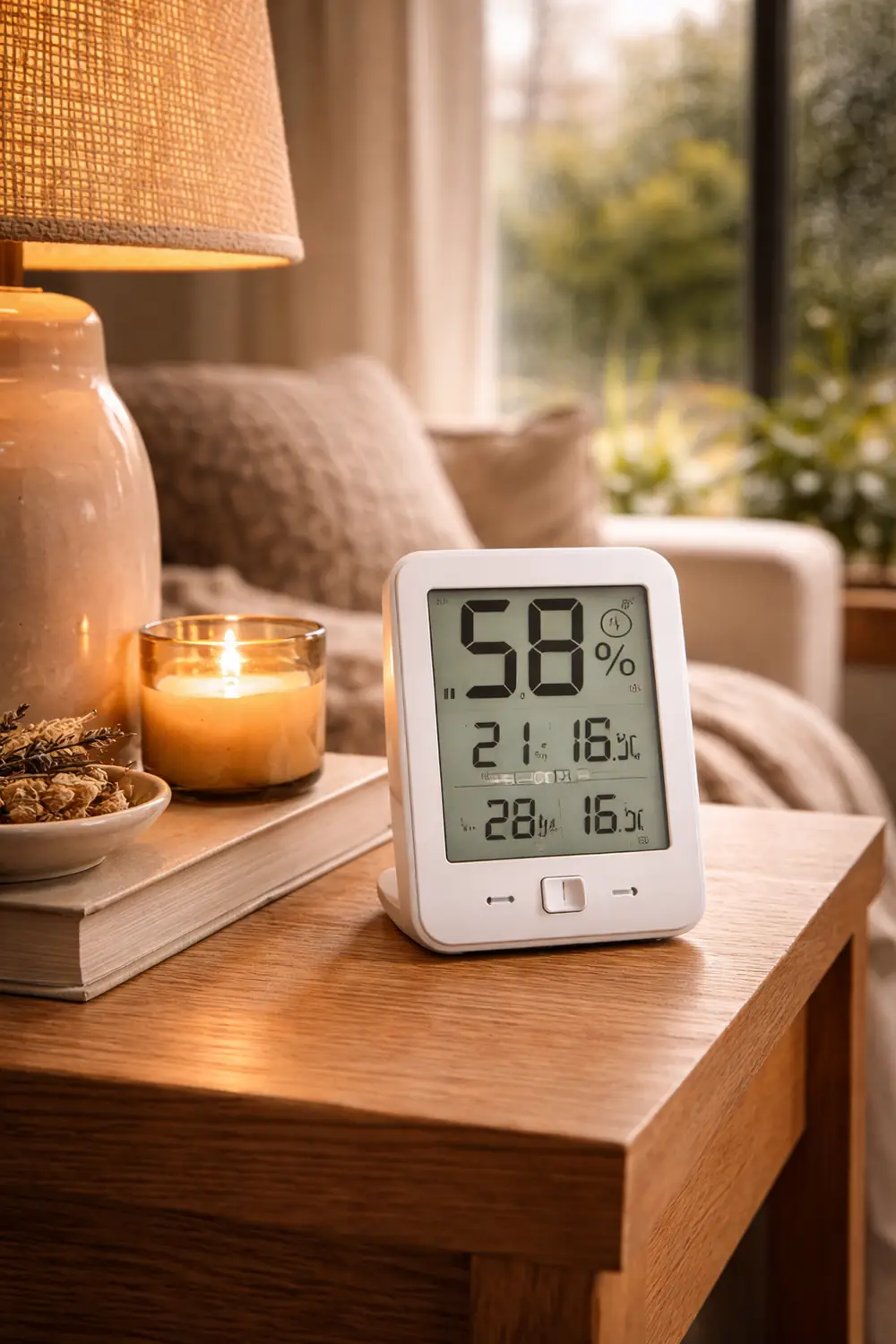
A practical way to tell whether the room is genuinely damp or whether one favourite cat spot simply happens to sit in the coldest part of it.
Tip: Many homes feel comfortable around 50-60% humidity. If a room stays above that, moisture may not be clearing properly.
Check humidity levelsAs an Amazon Associate I earn from qualifying purchases.
Cats are unusually good at turning one overlooked corner into their preferred base, which is exactly why localised dampness around that spot matters more than it first appears.
Dog spaces are often floor-based and open. Cat spaces are more vertical, tucked-in and repetitive. A cat may spend hours on the same ledge, chair back, shelf or cushioned basket because it offers warmth, privacy and a view out.
That matters because these elevated or enclosed spots often sit right beside the parts of the room where moisture behaves worst: window panes, corners behind curtains, alcoves and cold plaster near the outer wall.
So the question is not simply, "Is the room damp?" It is also, "Where in the room does my cat actually spend time?" Those two answers are not always the same.
That is why condensation around a cat's area can stay hidden in plain sight. The home still looks polished, but one highly-used perch keeps cycling through colder, damper air.
The biggest problem areas are often decorative as much as architectural: a padded window seat, a chair tucked into a bay, a basket hidden beneath a console, or a shelf surrounded by curtains and houseplants.
These spaces photograph beautifully and feel calm to us, but they can also trap still air. When they sit against colder surfaces, moisture has more time to linger on nearby fabric, timber and paintwork.
This is especially common in rooms that follow the same overnight pattern as bedroom condensation problems, where windows mist up before anyone notices the humidity building.
The aim is not to remove every soft, sheltered cat corner. It is to stop the nicest-looking corner from quietly becoming the least breathable part of the room.
Often the room feels more "stale" than obviously wet. That is why small repeated clues matter more than dramatic ones.
If those signs cluster around one room, it is usually worth correcting the environment before assuming the issue is just the season or the weather. If you are worried about symptoms, speak to a vet.
A common example is a cat who loves the back corner of a sofa positioned near a window. It feels elevated, soft and secure, so it becomes the default sleeping place. But behind the sofa, the wall is colder than the rest of the room and the curtain keeps airflow low.
Nothing looks wrong at first glance. Then the window starts misting each morning, the curtain hem smells faintly musty and the corner never feels quite fresh. The fix is not complicated, but it starts with recognising that the chosen cat spot and the moisture pattern are linked.
Once the air is drier and the furniture is given a little more breathing space, that same corner usually feels calmer in a much healthier way.
Most homes do not need a dramatic redesign. They need one damp-prone cat area to stop being sealed into the coldest part of the room.
If the pattern keeps returning, a compact dehumidifier is usually the cleanest way to reset the space without constant trial and error.
The room setup matters too. Cats often prefer beautifully styled corners, and those corners need airflow more than they need extra layering.
It makes sense to treat this as an indoor-environment issue first. Damp air and recurring condensation can lower the quality of the room your cat uses every day, especially if that room depends on one cold window or one poorly ventilated corner.
The fix is usually practical rather than dramatic: dry the room properly, improve the exact resting spot, and make sure the nicest place in the room is not also the dampest.
Related reads for comparing dog spaces, bedrooms and the other rooms where moisture quietly builds up.