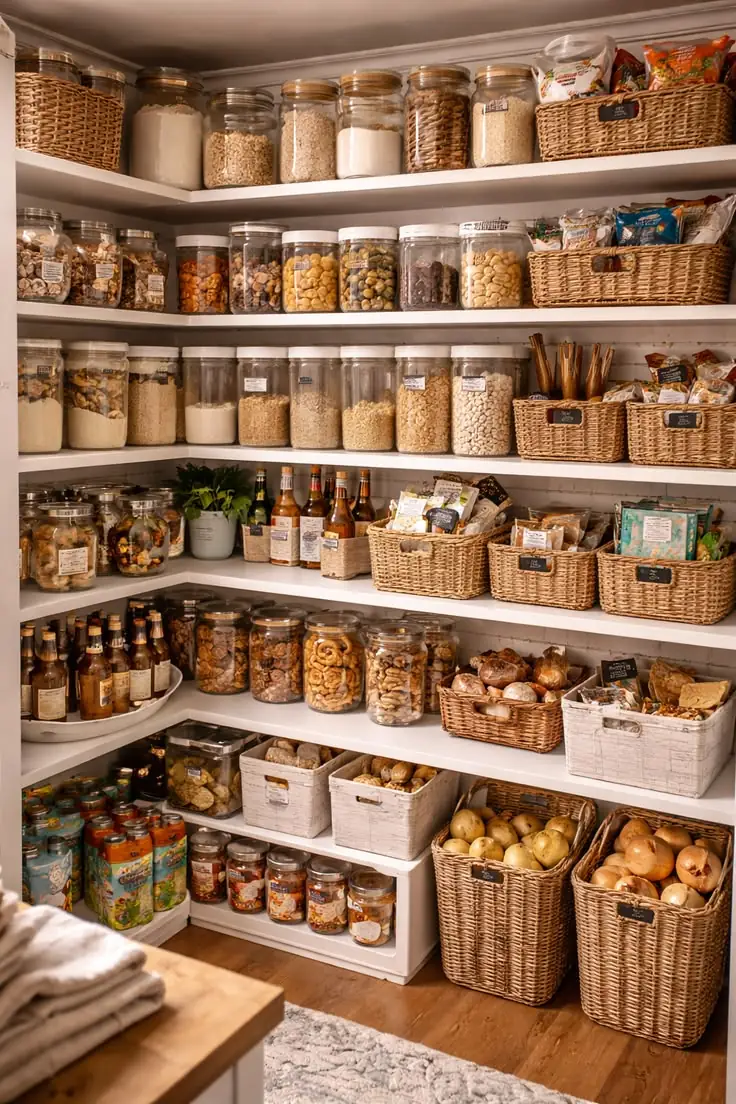
Why pantry systems break down so quickly
- Busy shelves fill with mixed categories too fast.
- Small items disappear behind bulk packaging.
- Duplicate buying happens when stock is hard to see.
- Back-stock spreads onto every shelf instead of one zone.
- Containers get added before the pantry has a real layout.
Why a pantry works better when arranged by use, not just by category
The easiest pantries to live with are usually arranged around routines. Breakfast items sit together, cooking staples stay visible, lunch items are easy to reach, and overflow stock has one controlled place instead of spreading into every available gap.
That is often what keeps the room from drifting back into clutter. A pantry does not need to look styled at every moment, but it should make the next task feel easier rather than slower.
Usually, the strongest pantry layouts are the ones that reduce decision-making.
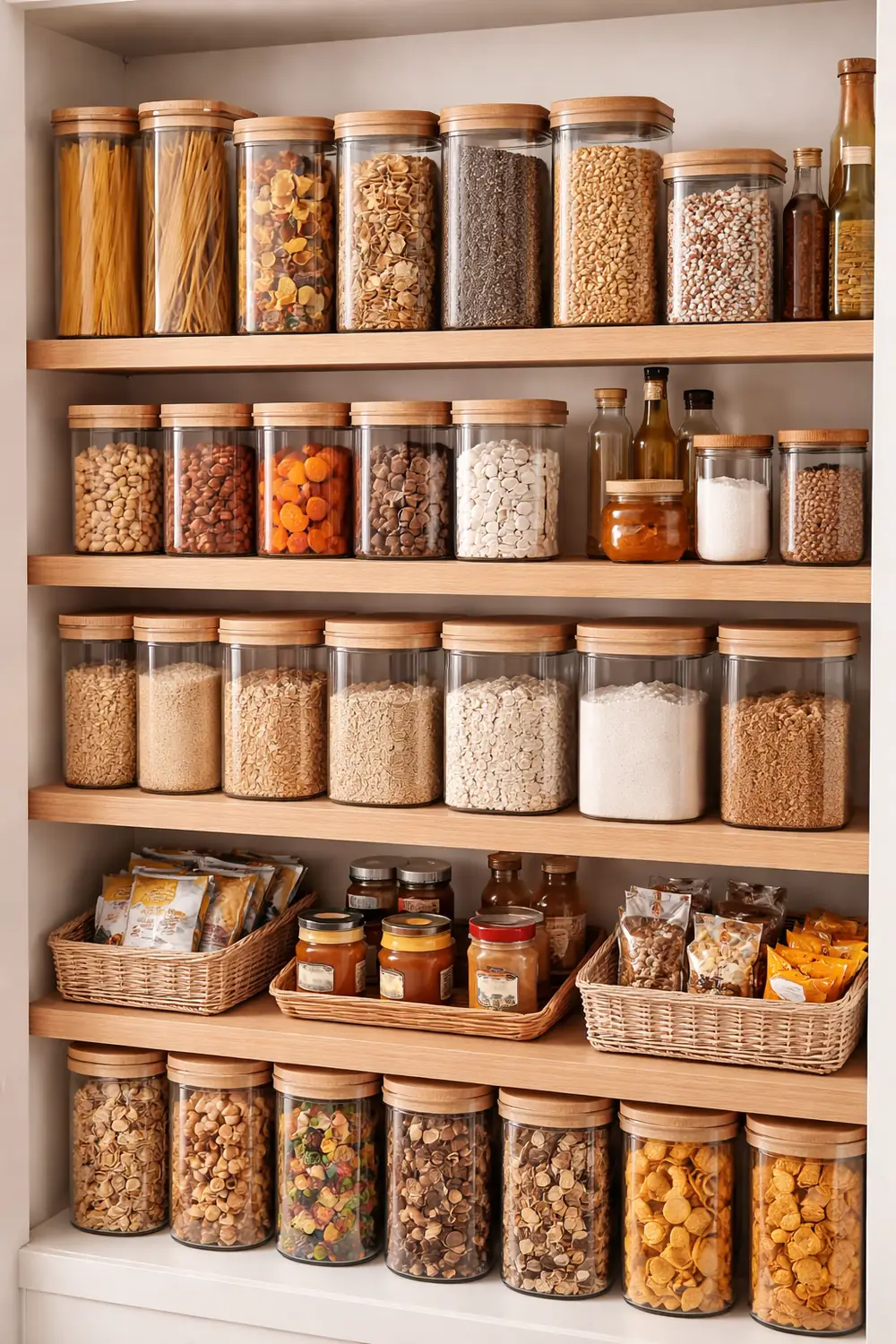
Pantry Storage Containers
Stops busy shelves feeling visually noisy and makes the pantry easier to scan at a glance.
This is what makes the main pantry shelves actually usable day to day.
- Improves visibility on busy shelves
- Reduces packaging clutter
- Makes zones easier to maintain
Commonly used in small homes and tight spaces
This section contains affiliate links. As an Amazon Associate, I earn from qualifying purchases.
Pantry Storage Containers
Stops busy shelves feeling visually noisy and makes the pantry easier to scan at a glance.
This is what makes the main pantry shelves actually usable day to day.
- Improves visibility on busy shelves
- Reduces packaging clutter
- Makes zones easier to maintain
Commonly used in small homes and tight spaces
This section contains affiliate links. As an Amazon Associate, I earn from qualifying purchases.
What keeps shelves feeling calmer
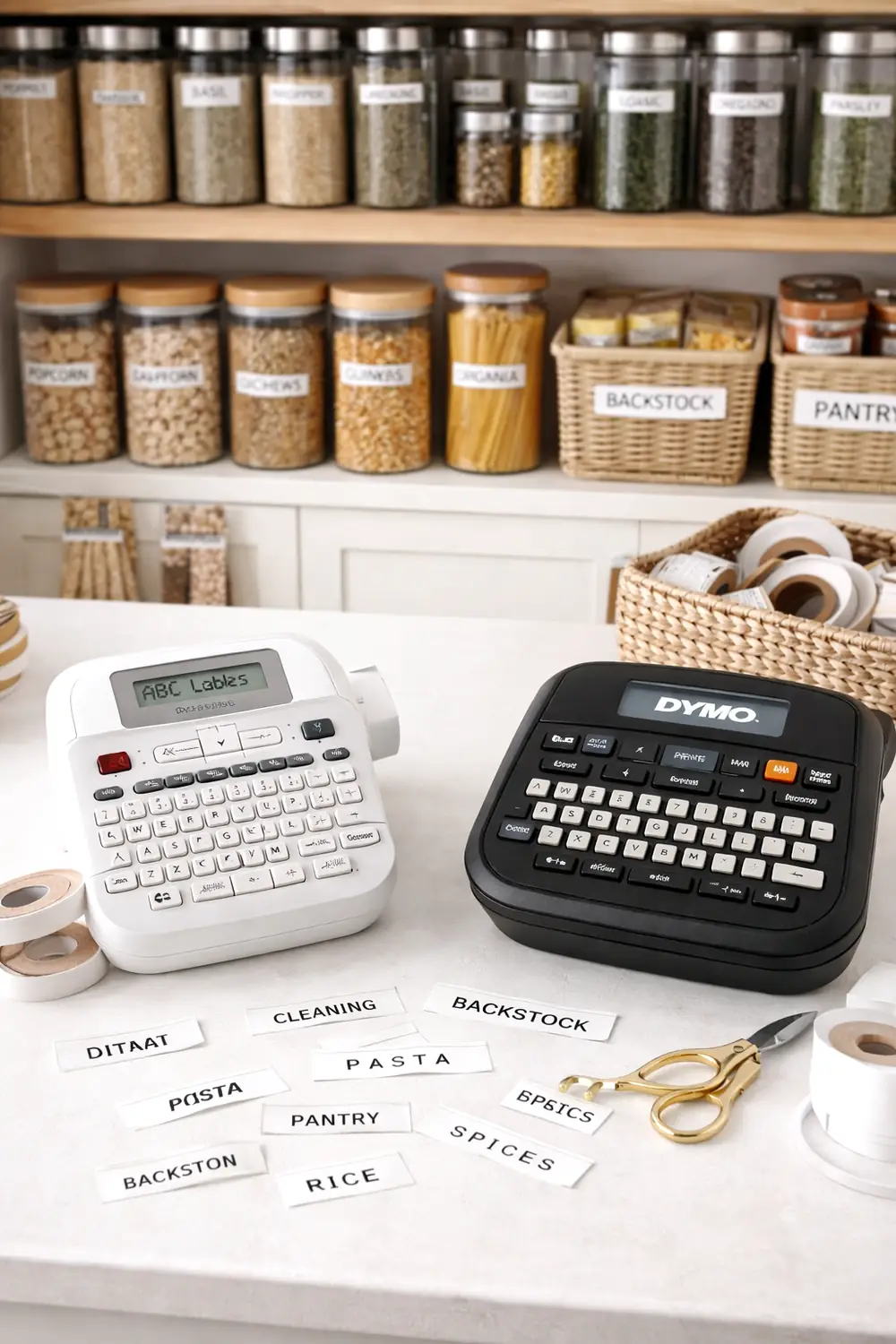
Using matching baskets, a few clear containers, and one label system can help, but only after the basic zones are right. It also helps to leave a little empty space. Shelves that are packed edge to edge usually become harder to clean and harder to use.
One shelf for flexible overflow often works better than trying to make every shelf permanently perfect. That gives groceries, party supplies, and larger purchases somewhere to land without disrupting the whole arrangement.
That small amount of slack is often what makes the system last.
Practical details that make a difference
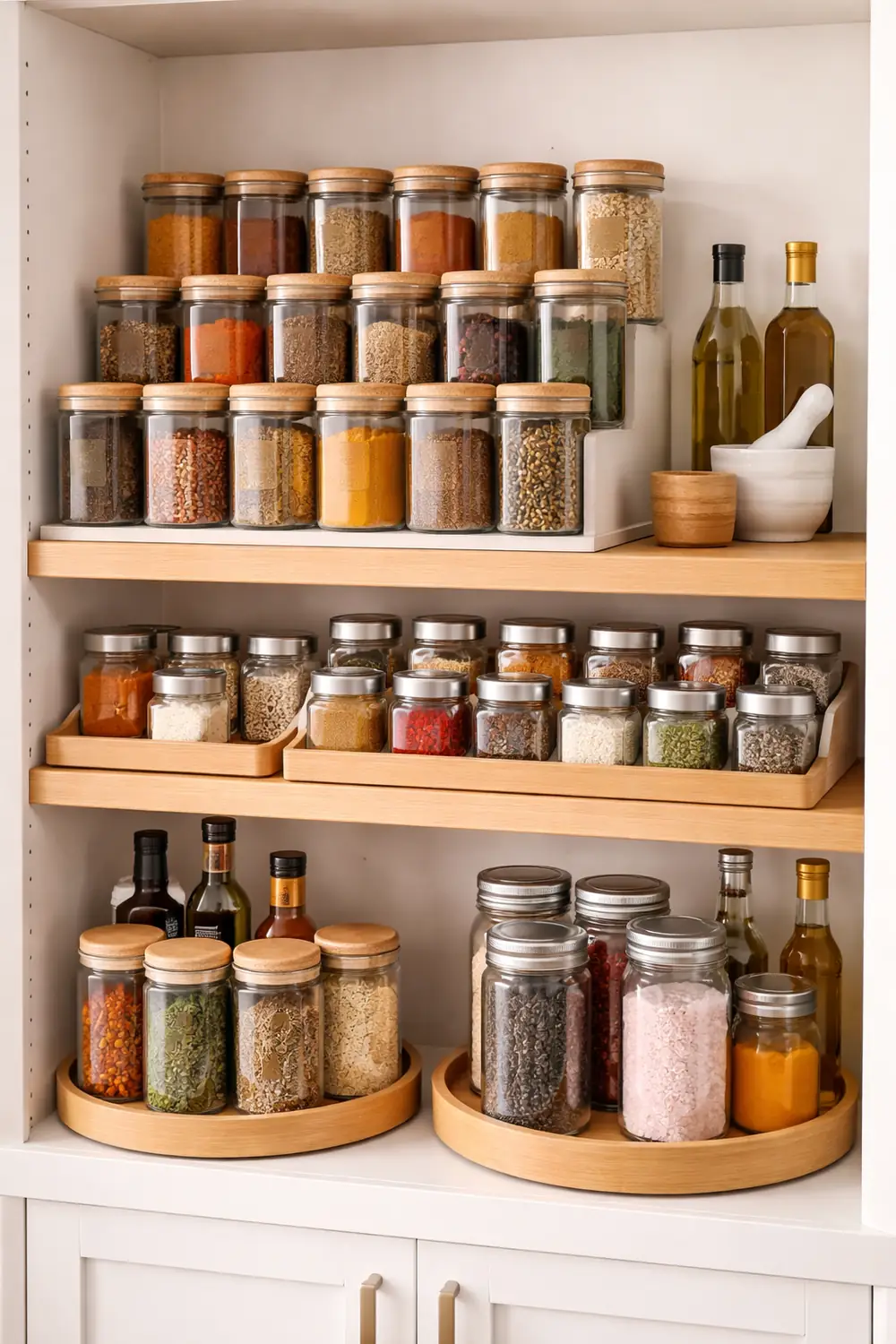
Shorter items such as cans, spices, and condiments usually benefit from risers or shallow storage pieces so they do not disappear in rows. Heavier appliances and backup items generally work better on lower shelves, while the most-used ingredients should stay near eye level.
If the pantry is inside a cabinet or beside a colder wall, it also helps not to push cardboard boxes or baskets tightly into every corner. A little space makes cleaning and checking the area much easier.
The goal is a pantry that works in real life, not just in a photo.
- Group shelves around real routines.
- Use one shelf for back-stock rather than spreading it everywhere.
- Keep smaller items lifted into view when possible.
- Leave enough open space for the pantry to stay flexible.