


What to check first
- If windows mist up in the morning, the room likely stayed humid overnight.
- If only one corner feels cold or damp, airflow may be poor around that wall or window.
- If the problem gets worse after laundry or showers, the moisture is probably travelling from elsewhere in the home.
- If humidity stays high all day, the room may need active moisture removal rather than just brief ventilation.
If this keeps happening, the room can stay cooler, heavier and more prone to damp buildup in the quiet corners that never fully dry out.
Why condensation appears in otherwise well-designed rooms
Condensation is simply moisture in the air turning back into water when it meets a cooler surface. In a living room or bedroom, that surface is often glass, a window frame or an outside wall that stays colder than the air around it. The room may still look balanced, clean and carefully designed, yet the moisture pattern can be working quietly in the background.
This is common in homes that are well insulated and relatively airtight. Those qualities often improve comfort and energy efficiency, but they also reduce the small natural air leaks that used to carry humid air away. When everyday moisture from showers, cooking, laundry and even breathing builds up indoors, it eventually settles in the coolest parts of the room.
Why good design does not prevent it completely
Large windows, thick curtains, furniture placed close to external walls and closed internal doors can all affect how air moves through a room. None of these choices are wrong in themselves. The issue is simply that some layouts create calmer, more enclosed pockets of air where humidity clears more slowly.
Temperature swings can add to this. If a room cools down sharply at night or sits unused for long periods, the surfaces inside it may become cold enough for moisture to settle quickly once the room is in use again. That is why condensation often appears first thing in the morning, even in spaces that feel well maintained.
Subtle changes that usually help
Most of the time, the answer is not to overhaul the room. Steadier background heating, light ventilation after high-moisture activities and a little more airflow around windows and external walls can all help the space stay more balanced. The aim is to let moisture move out before it gathers into visible droplets.
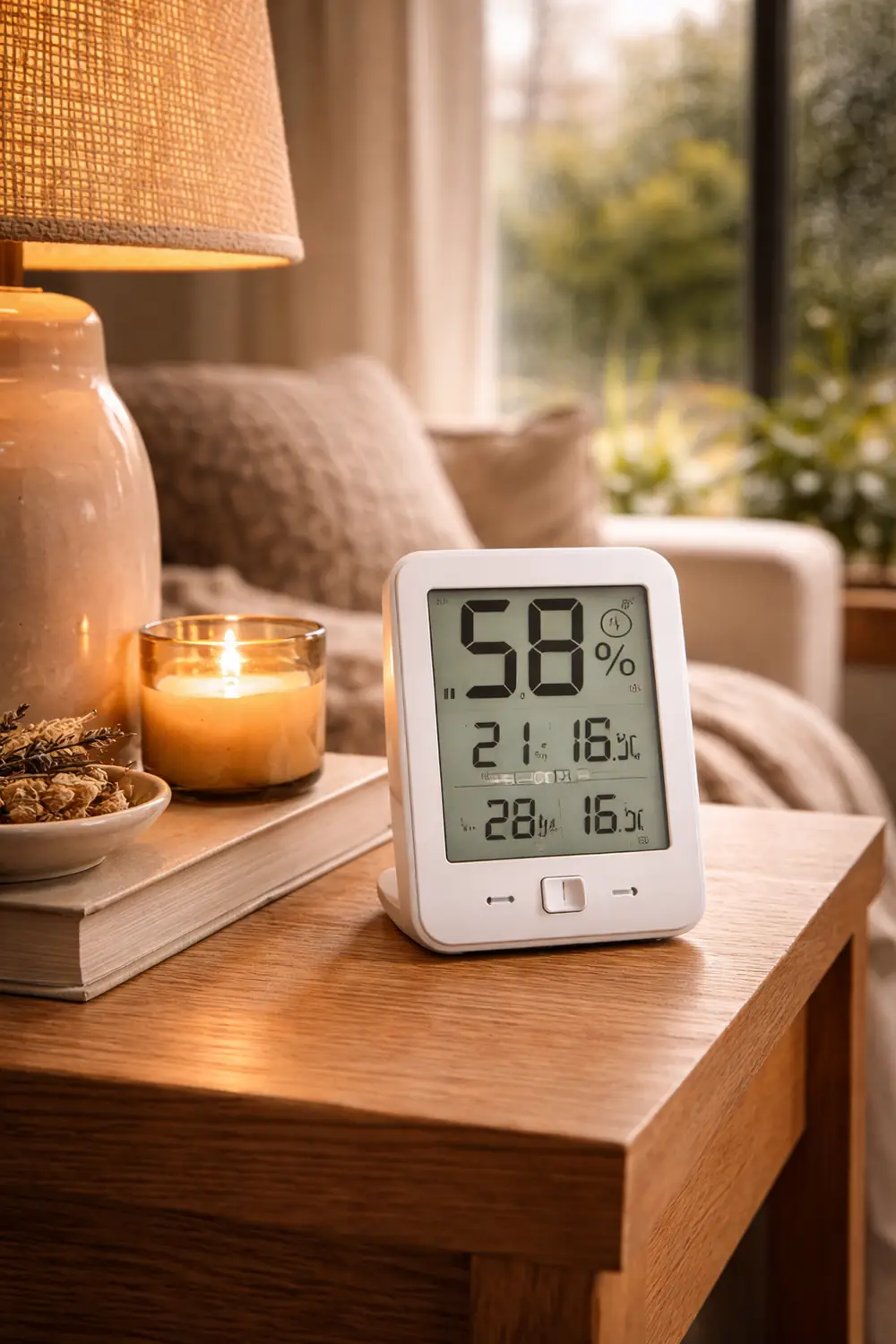
A hygrometer is useful because it takes the guesswork out of the process. If humidity stays high for long periods, a compact dehumidifier can help bring the room back into a more comfortable range without making the space feel clinical or over-managed.
- Keep heating steady rather than allowing sharp drops in temperature.
- Allow gentle airflow between rooms where possible.
- Ventilate briefly after showers, cooking or indoor drying.
- Check humidity levels if windows mist up regularly.