Why bedrooms quietly hold moisture
- Closed doors slow the movement of overnight air.
- Breathing through the night steadily adds moisture.
- Furniture close to exterior walls traps airflow.
- Cool windows and corners collect moisture first.
- Winter ventilation is often more limited.

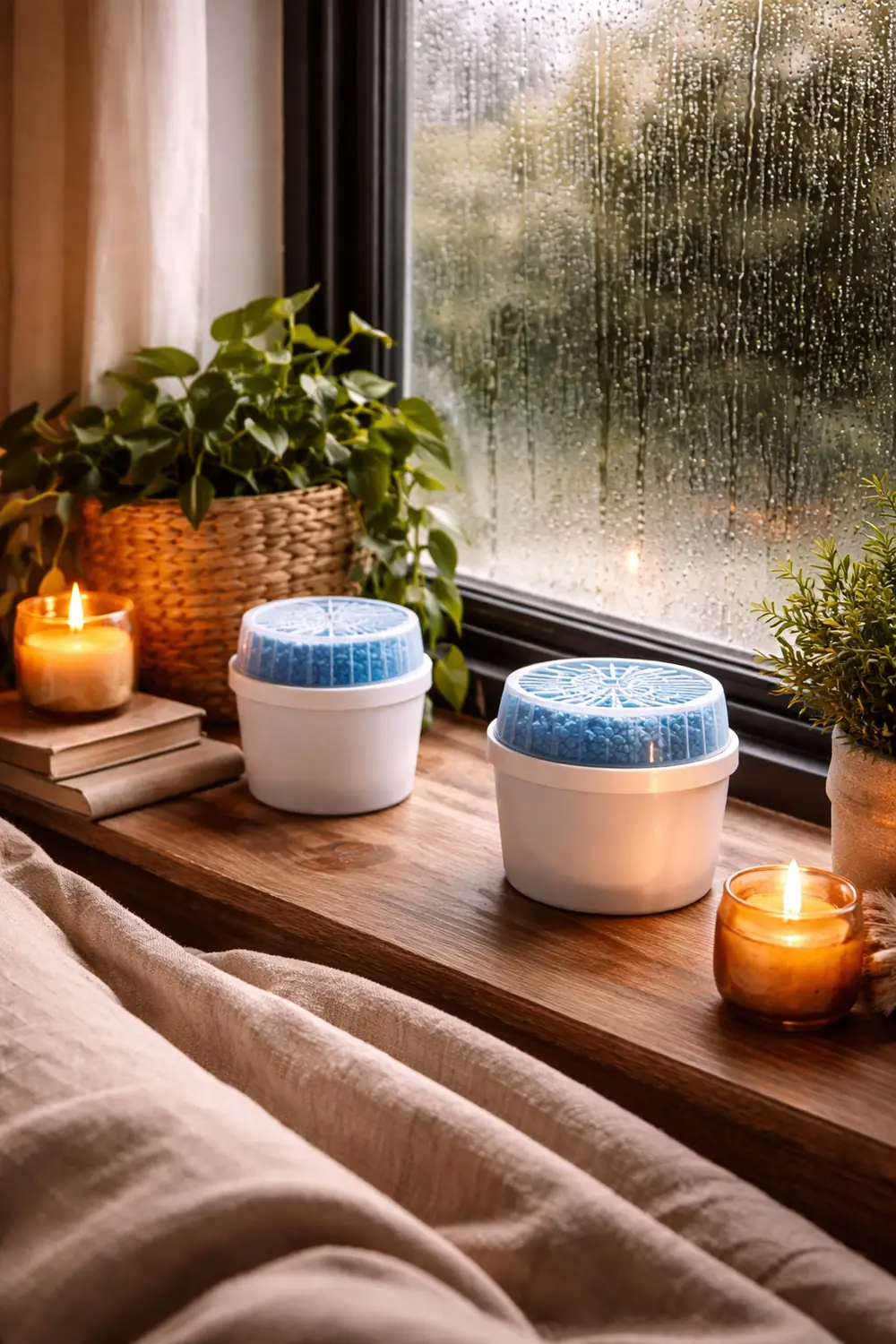
Dehumidifiers
The most effective option in most bedrooms where condensation builds up regularly - especially during colder months.
- Helps reduce moisture build-up naturally
- Works quietly in everyday living spaces
- Supports a fresher, lighter feeling in the room
Used in everyday homes
See how this worksThis section contains affiliate links. As an Amazon Associate, I earn from qualifying purchases.
Why bedrooms often feel damp by morning
Bedrooms are usually closed for long stretches, especially overnight. With doors shut, windows closed and little active ventilation, moisture from breathing can build up quietly in the air. By morning, that can be enough to leave glass, frames and colder walls feeling damp even when the room looks tidy and well cared for.
This is more noticeable in winter, in smaller rooms, or where furniture sits close to exterior walls. The room can still feel comfortable to sleep in, yet moisture may be collecting slowly in places that do not dry well during the day.
That’s usually the point where the room starts to feel slightly heavier than it should.
Why condensation shows up on bedroom windows first
Windows are often the first place the problem appears because glass tends to stay cooler than the surrounding air. When warm indoor moisture reaches that surface, it turns back into water droplets. Thick curtains, blinds and limited airflow around the window can slow down drying even more.
Bedrooms can also trap still pockets of air behind closets, beside bedside tables or near external corners. That means the moisture pattern is not always obvious from the middle of the room, even when the edges of the space are staying slightly damp.
That’s usually the point where the room starts to feel slightly heavier than it should.
Simple ways to make the room feel drier
The goal is usually not to make the room feel clinical, but to help moisture clear more easily. A little more airflow in the morning, steadier background warmth and keeping a small gap between furniture and colder walls can all help. If the room regularly wakes up damp, a compact dehumidifier can make the biggest difference.
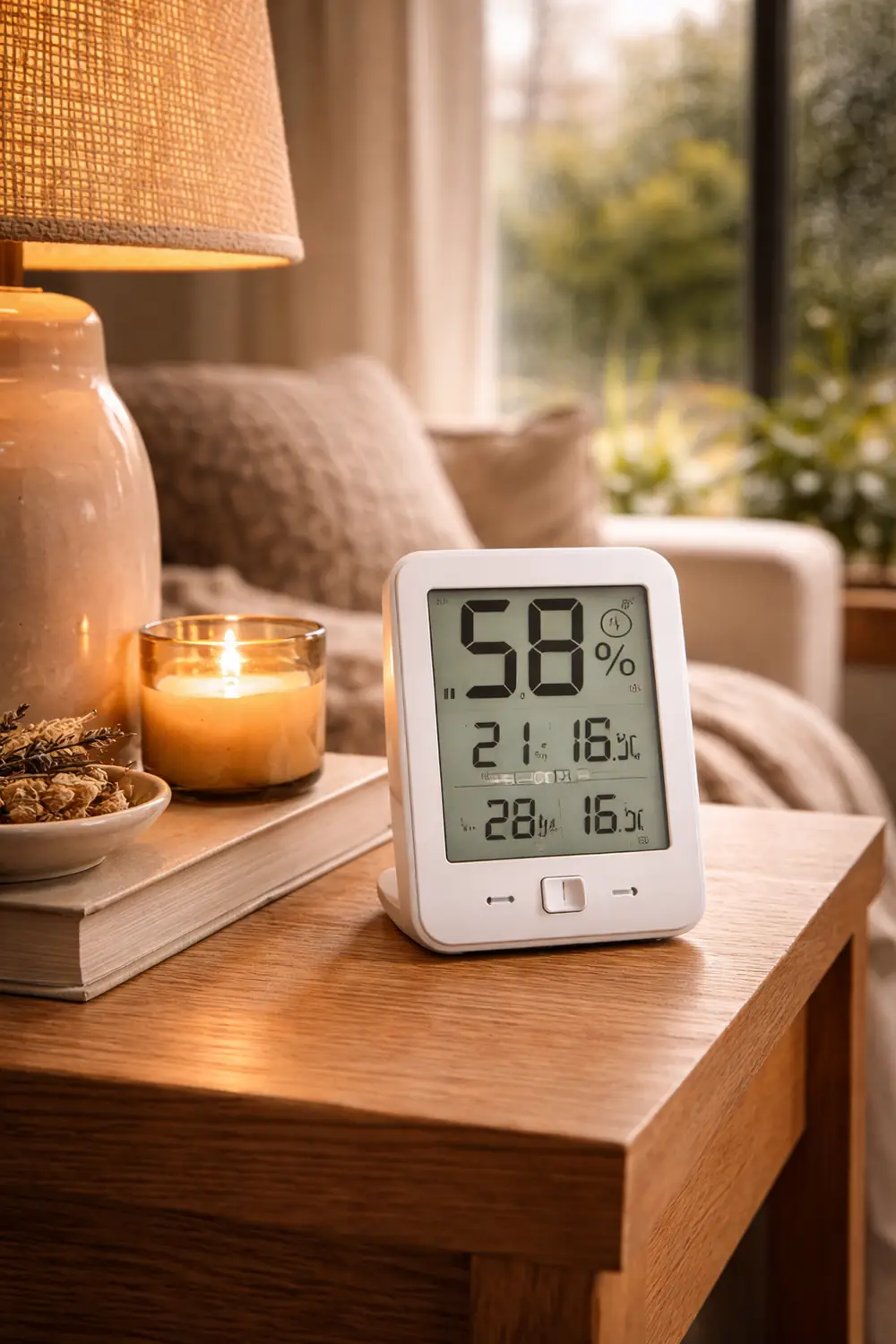
A hygrometer is useful because it shows whether the room is actually drying out during the day. That makes it easier to spot patterns and decide whether the problem is occasional or part of your normal routine.
In many homes, a small dehumidifier like this is enough to shift how quickly the room clears.
That’s usually the point where the room starts to feel slightly heavier than it should.
- Open the room up briefly in the morning so damp air can clear.
- Keep a little space around windows, closets and colder walls.
- Use steady background warmth rather than sharp temperature drops.
- Check humidity levels if condensation appears overnight more than occasionally.